
Florida Proposal to Eliminate Property Taxes on Primary Residences: Deep Dive on the Impact for Brickell & Downtown Miami
Florida’s Proposal to Eliminate Property Taxes on Primary Residences
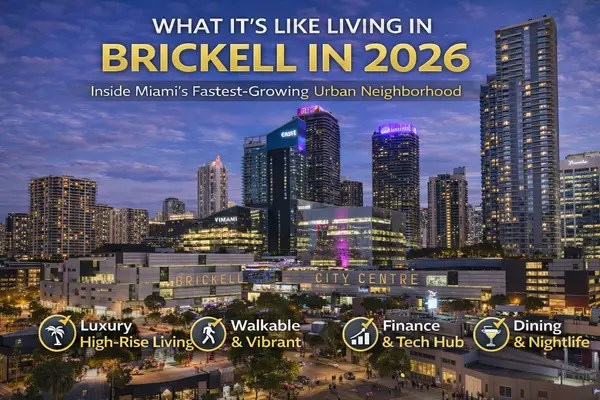
What It Means for Brickell & Downtown Miami
Florida lawmakers are advancing a proposal that could fundamentally reshape the state’s tax system: eliminating property taxes on primary residences.
If implemented, this would represent one of the most significant structural tax shifts in Florida’s modern history — particularly in high-value urban markets such as Brickell and Downtown Miami.
Before analyzing the impact, we need to break down:
• How Florida property taxes currently work
• What exactly is being proposed
• Who would qualify
• What must happen for approval
• What it could mean financially for a $1,000,000 condo in Brickell / Downtown Miami
• The broader market implications
This is not yet law. It is a proposal. The details matter.
How Florida Property Taxes Work Today
Florida has no state income tax. Instead, local governments rely heavily on property taxes to fund:
• Public schools
• Police and fire departments
• Infrastructure
• Municipal services
• County operations
Property taxes are calculated as:
Assessed Value × Millage Rate
In Miami-Dade County, effective property tax rates typically range between 1.8% and 2.2%, depending on municipality and voter-approved levies.
That means a $1,000,000 property in Miami often generates annual tax bills between $18,000 and $22,000 before exemptions.
Existing Homestead Protections
Florida already offers strong primary residence protections:
Homestead Exemption
• First $50,000 of assessed value exempted (partial impact)
Save Our Homes Cap
• Assessed value increases capped at 3% annually for homesteaded properties
Portability
• Ability to transfer tax savings when moving within Florida
Even with these protections, property taxes still represent one of the largest annual ownership costs for Miami condo owners.
What the Proposal Would Change
The proposal under discussion would eliminate property taxes on homesteaded primary residences.
Key characteristics:
• Applies only to primary residences
• Requires homestead exemption status
• Excludes investment properties
• Excludes second homes
• Requires constitutional amendment
If enacted, qualifying homeowners would no longer pay annual property taxes on their primary residence.
However, funding replacement mechanisms would need to be established.
Who Would Be Eligible?
Eligibility would likely mirror current homestead requirements:
To qualify, you must:
• Own the property
• Declare it as your permanent primary residence
• Be a Florida resident
• File for homestead exemption
Not eligible:
• Investment properties
• Short-term rental condos
• Corporate-owned units
• Foreign buyers without Florida residency
This distinction is critical in Brickell and Downtown Miami, where a meaningful percentage of condos are investor-owned or used as secondary residences.
Approval Process: What Has to Happen Next?
Because property taxation is embedded in Florida’s constitutional framework, this is not simple legislation.
For it to become law:
1️⃣ Florida Senate Approval
The Senate must pass the measure.
2️⃣ Ballot Placement
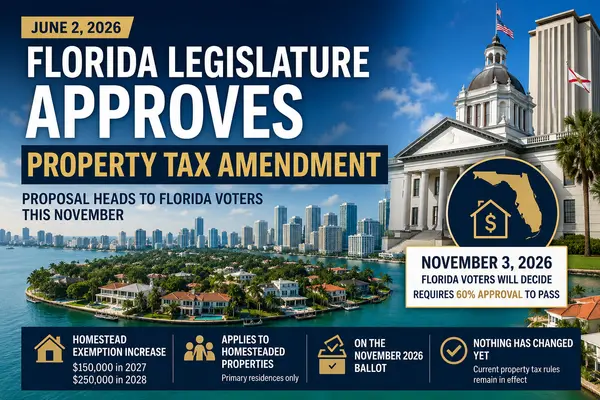
It must be placed on a statewide ballot as a constitutional amendment.
3️⃣ 60% Voter Approval
Florida requires a 60% supermajority for constitutional amendments.
4️⃣ Implementation Structure
If approved, lawmakers must:
• Define replacement funding sources
• Adjust local government budgets
• Establish phase-in timing
• Clarify final eligibility criteria
Implementation would likely not be immediate.
Sample Calculation: $1,000,000 Brickell / Downtown Miami Condo
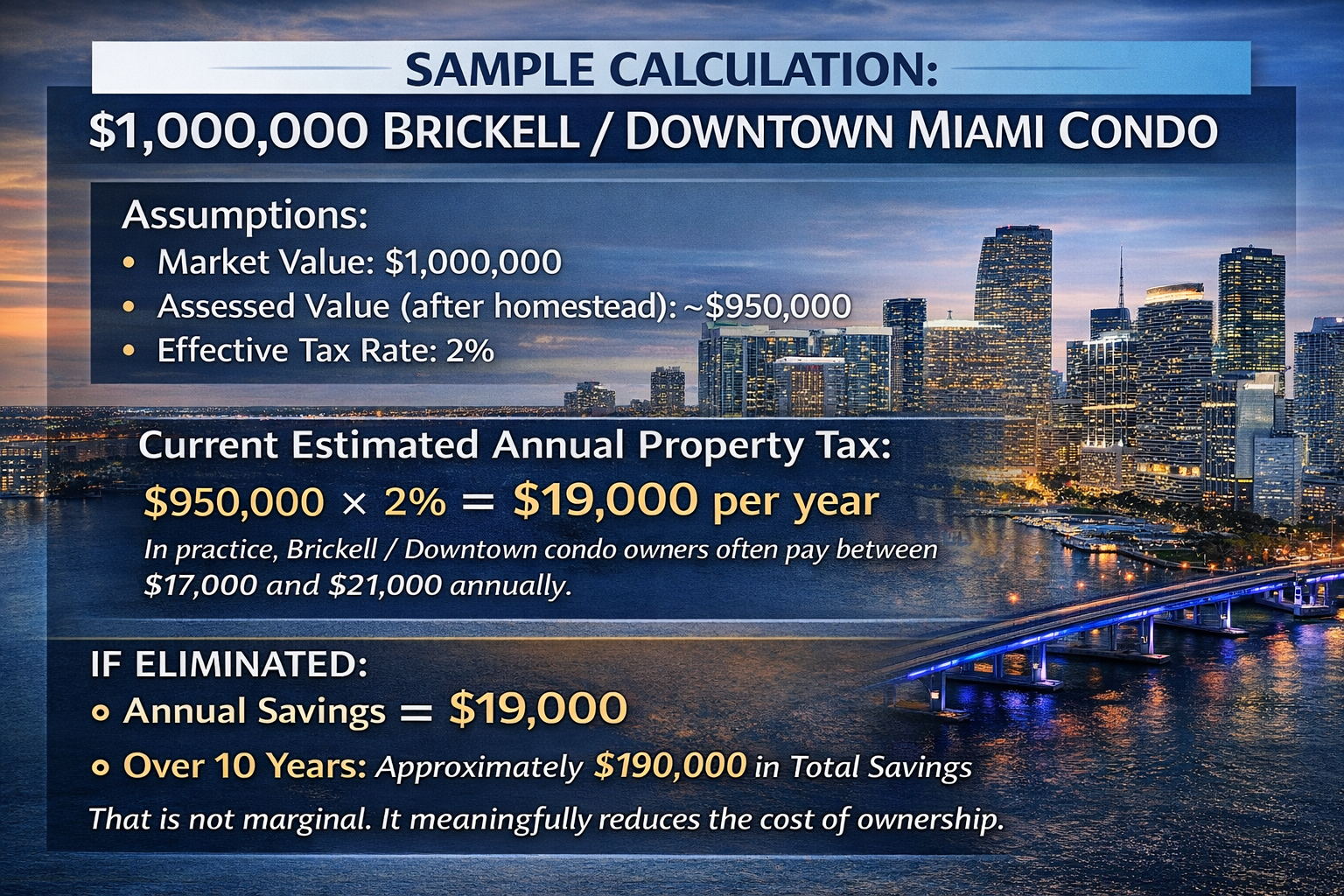
Let’s run a realistic example.
Assumptions:
• Market value: $1,000,000
• Assessed value (after homestead): ~$950,000
• Effective tax rate: 2%
Current Estimated Annual Property Tax:
$950,000 × 2% = $19,000 per year
In practice, Brickell / Downtown condo owners often pay between $17,000 and $21,000 annually.
If Eliminated:
Annual savings ≈ $19,000
Over 10 years:
Approximately $190,000 in total savings
That is not marginal. It meaningfully reduces the cost of ownership.
What This Means for Brickell & Downtown Miami
Brickell and Downtown Miami are:
• The densest condo markets in Florida
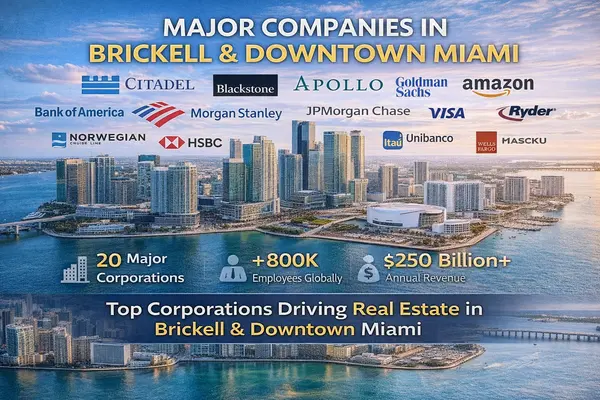
• The financial and corporate core of the city
• Highly international buyer markets
• Rental-driven in many buildings
If primary residence property taxes were eliminated:
1️⃣ Carrying Costs Drop Significantly
Lower annual cost increases affordability thresholds.
2️⃣ End-User Demand Could Increase
Renters may convert to owners if the math improves.
3️⃣ Owner-Occupied Units Gain Advantage
Primary residence units become structurally more attractive than investor-owned units.
4️⃣ Pricing Could Reprice at the Margin
Lower ownership cost can increase what buyers are willing to pay — though market reaction depends on implementation details.
Investor vs Owner-Occupant Split
This proposal creates an important structural divide:
Primary Residence → Potentially no property tax
Investment Property → Still taxed
That could:
• Increase premium on homestead-eligible units
• Encourage homestead conversion
• Reduce some investor demand
• Shift pricing tiers between owner-occupied and rental units
In urban condo markets, this distinction matters.
Broader Economic Considerations
Property taxes fund local government.
Eliminating them would require:
• Alternative revenue sources (sales tax adjustments?)
• State funding redistribution
• Budget restructuring
Without replacement funding clarity, municipalities face fiscal constraints.
Markets react not just to tax cuts — but to how they are funded.
Competitive Positioning: Florida vs Other States
If enacted, Florida would offer:
• No state income tax
• No property tax on primary residences
• Homestead protections
• Strong asset protection laws
Compared to:
• New York (state + city income tax + property tax)
• California (income tax + property tax)
• Illinois (high property tax)
Florida’s tax positioning would become uniquely competitive among major U.S. markets.
That could strengthen long-term inbound migration.
Risks and Unknowns
This remains a proposal.
Unknowns include:
• Funding replacement model
• Implementation timeline
• Whether caps or thresholds would be introduced
• Whether municipalities could offset revenue loss through fees
Markets require clarity before full repricing occurs.
Strategic Considerations for Buyers
For buyers in Brickell / Downtown Miami:
• Model current taxes conservatively
• Monitor legislative progress
• Understand homestead eligibility
• Evaluate ownership horizon
Long-term primary residents stand to benefit the most if enacted.
Investors should assume no change unless law is finalized.
Summary
Florida’s proposal to eliminate property taxes on primary residences is one of the most consequential tax discussions in recent years.
If enacted:
• A $1,000,000 Brickell / Downtown Miami condo could save approximately $19,000 per year
• Ownership costs drop materially
• Primary residence demand strengthens
• Miami becomes even more tax-competitive nationally
However:
• It requires Senate approval
• It requires 60% voter approval
• It requires a replacement funding mechanism
• It is not yet law
Policy shifts can influence markets — but only once enacted and implemented.
For now, this is a proposal worth monitoring carefully.
📍 Looking for your next Miami property?
Contact Miami Realty Solution Group today at 📞 786-361-7289
or visit https://www.miamirealtysolution.com
Explore opportunities in Brickell, Downtown, Edgewater, Miami Beach, Surfside, and cities beyond.
Categories
Recent Posts






GET MORE INFORMATION